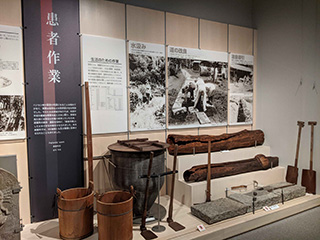
- There were many things that needed to be done in the sanatorium but there were not enough doctors, nurses or people to take care of the patients.
- The patients were made to work even though they were there to be treated for their illness. They had to do the work of the sanatorium staff such as preparing meals, doing laundry, carpentry, and caring for the seriously ill patients. This was called “patient chores.”
- They were paid very little. Furthermore, the money was taken out of the sanatorium budget for food and medical supplies. When the number of people and the amount of money to be paid increased, it impacted the budget for food and other daily necessities.
- The patients suffered from sensory loss and motor paralysis. Yet they were made to work. The result was general aggravation of their disease, resulting in amputation of limbs or loss of eyesight.
- In retrospect, even in those days when there was no effective drug to cure Hansen’s disease, the effect would not have been as serious had they not been unreasonably made to work.
- As a result, their symptoms worsened and disabilities progressed in the sanatoria where patients were supposed to be treated for their disease.